


Spassky Cave Church in Russia
13 years ago


Hidden in a Hubble Space Telescope photo released earlier this year is a small smudge of light that European astronomers now calculate is a galaxy from 13.1 billion years ago. That's a time when the universe was very young, just shy of 600 million years old. That would make it the earliest and most distant galaxy seen so far.
By now the galaxy is so ancient it probably doesn't exist in its earlier form and has already merged into bigger neighbors, said Matthew Lehnert of the Paris Observatory, lead author of the study published online Wednesday in the journal Nature.

While Ellis finds the basis for the study "pretty good," there have been other claims about the age of distant space objects that have not held up to scrutiny. And some experts have questions about this one. But even the skeptics praised the study as important and interesting.
The European astronomers calculated the age after 16 hours of observations from a telescope in Chile that looked at light signatures of cooling hydrogen gas.
Earlier this year, astronomers had made a general estimate of 600 to 800 million years after the Big Bang for the most distant fuzzy points of light in the Hubble photograph, which was presented at an astronomy meeting back in January.
In the new study, researchers focused on a single galaxy in their analysis of hydrogen's light signature, further pinpointing the age. Garth Illingworth of the University of California, Santa Cruz, who was the scientist behind the Hubble image, said it provides confirmation for the age using a different method, something he called amazing "for such faint objects."
The new galaxy doesn't have a name — just a series of letters and numbers. So Lehnert said he and colleagues have called it "the high red-shift blob. "Because it takes so long for the light to travel such a vast time and distance, astronomers are seeing what the galaxy looked like 13.1 billion years ago at a time when it was quite young — maybe even as young as 100 million years old — Lehnert said. It has very little of the carbon or metal that we see in more mature stars and is full of young, blue massive stars, he said.
What's most interesting to astronomers is that this finding fits with theories about when the first stars and galaxies were born. This galaxy would have formed not too soon after them.
"We're looking almost to the edge, almost within 100 million years of seeing the very first objects," Ellis said. "One hundred million years to a human seems an awful long time, but in astronomical time periods, that's nothing compared to the life of the stars."

A new critique, published as a chapter in the new textbook "Calendars and Years II: Astronomy and Time in the Ancient and Medieval World" (Oxbow Books, 2010), argues that the accepted conversions of dates from Mayan to the modern calendar may be off by as much as 50 or 100 years. That would throw the supposed and overhyped 2012 apocalypse off by decades and cast into doubt the dates of historical Mayan events. (The doomsday worries are based on the fact that the Mayan calendar ends in 2012, much as our year ends on Dec. 31.)
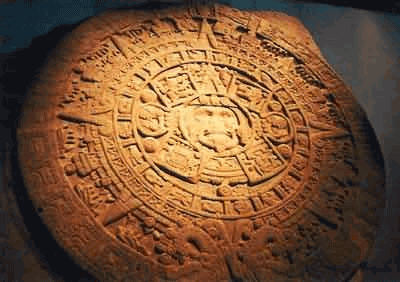
Later, the GMT constant was bolstered by American linguist and anthropologist Floyd Lounsbury, who used data in the Dresden Codex Venus Table, a Mayan calendar and almanac that charts dates relative to the movements of Venus.

But according to Aldana, Lounsbury's evidence is far from irrefutable.
"If the Venus Table cannot be used to prove the FMT as Lounsbury suggests, its acceptance depends on the reliability of the corroborating data," he said. That historical data, he said, is less reliable than the Table itself, causing the argument for the GMT constant to fall "like a stack of cards."
Aldana doesn't have any answers as to what the correct calendar conversion might be, preferring to focus on why the current interpretation may be wrong. Looks like end-of-the-world theorists 
LiveScience.com chronicles the daily advances and innovations made in science and technology. We take on the misconceptions that often pop up around scientific discoveries and deliver short, provocative explanations with a certain wit and style. Check out our science videos, Trivia & Quizzes and Top 10s. Join our community to debate hot-button issues like stem cells, climate change and evolution. You can also sign up for free newsletters, register for RSS feeds and get cool gadgets at the LiveScience Store.
 "How can it be ordinary? There is something going on."Despite clear skies, it was not easy to make out the tiny object shimmering overhead."You really have to look up to see it," said one witness, who gave only his first name, Rico. "It's a little crazy. I guess that's why they call it an unidentified flying object because they don't know what it is."Not long after the first sightings, messages began appearing on Twitter linking to a month-old press release announcing the publication of a book by a retired NORAD officer predicting that UFOs would buzz the earth's major cities on Oct. 13.
"It's like a flat bread, like a pancake with just water and flour," said Laura Longo, a researcher on the team from the Italian Institute of Prehistory and Early History.
"You make a kind of pita and cook it on the hot stone," she said, describing how the team replicated the cooking process. The end product was "crispy like a cracker but not very tasty," she added.
The grinding stones, each of which fit comfortably into an adult's palm, were discovered at archaeological sites in Italy, Russia and the Czech Republic.
The researchers said their findings throw mankind's first known use of flour back some 10,000 years, the previously oldest evidence having been found in Israel on 20,000 year-old grinding stones.
The findings may also upset fans of the Paleolithic diet, which follows earlier research that assumes early humans ate a meat-centered diet.
Also known as the caveman diet, the regime frowns on carbohydrate-laden foods like bread and cereal, and modern-day adherents eat only lean meat, vegetables and fruit.
It was first popularized by the gastroenterologist Walter L. Voegtlin, whose 1975 book lauded the benefits of the hunter-gatherer diet.
 UFO? Kite? New Chinese military aircraft? Whatever it was last month, it's still hovering in the news.
 Yesterday, the UFO reappeared — in the saucy British tabloid The Sun, renewing interest in the night lights over northeastern China. Accompanying a photo, The Sun wrote that a "major" airport "was forced to shut down to prevent packed passenger jets crashing into a UFO." Without citing a source, the paper described the object as, quote, "flat and tubular" (a seeming oxymoron ) and wrote that it "hovered two miles from Bootee" (its transliteration of Baotou). "Astonished officials say it then zoomed in to circle the airport before suddenly vanishing," according to The Sun.
 Last month's report was the ninth in three months, with at least eight sightings reported in several provinces between late June and late July. One in July that briefly closed an airport in Hangzhou turned out to be part of a military test at a nearby air base. Another UFO was just jet contrails, and one other was a kite.
 Astronomers say they have for the first time spotted a planet beyond our own in what is sometimes called the Goldilocks zone for life: Not too hot, not too cold. Juuuust right.
 Not too far from its star, not too close. So it could contain liquid water. The planet itself is neither too big nor too small for the proper surface, gravity and atmosphere.
It's just right. Just like Earth.
"This really is the first Goldilocks planet," said co-discoverer R. Paul Butler of the Carnegie Institution of Washington.
The new planet sits smack in the middle of what astronomers refer to as the habitable zone, unlike any of the nearly 500 other planets astronomers have found outside our solar system. And it is in our galactic neighborhood, suggesting that plenty of Earth-like planets circle other stars.
Finding a planet that could potentially support life is a major step toward answering the timeless question: Are we alone?
Scientists have jumped the gun before on proclaiming that planets outside our solar system were habitable only to have them turn out to be not quite so conducive to life. But this one is so clearly in the right zone that five outside astronomers told The Associated Press it seems to be the real thing.
"This is the first one I'm truly excited about," said Penn State University's Jim Kasting. He said this planet is a "pretty prime candidate" for harboring life.
Life on other planets doesn't mean E.T. Even a simple single-cell bacteria or the equivalent of shower mold would shake perceptions about the uniqueness of life on Earth.
But there are still many unanswered questions about this strange planet. It is about three times the mass of Earth, slightly larger in width and much closer to its star — 14 million miles away versus 93 million. It's so close to its version of the sun that it orbits every 37 days. And it doesn't rotate much, so one side is almost always bright, the other dark.
Temperatures can be as hot as 160 degrees or as frigid as 25 degrees below zero, but in between — in the land of constant sunrise — it would be "shirt-sleeve weather," said co-discoverer Steven Vogt of the University of California at Santa Cruz.
It's unknown whether water actually exists on the planet, and what kind of atmosphere it has. But because conditions are ideal for liquid water, and because there always seems to be life on Earth where there is water, Vogt believes "that chances for life on this planet are 100 percent."
The astronomers' findings are being published in Astrophysical Journal and were announced by the National Science Foundation on Wednesday.

That close proximity and the way it was found so early in astronomers' search for habitable planets hints to scientists that planets like Earth are probably not that rare.
Vogt and Butler ran some calculations, with giant fudge factors built in, and figured that as much as one out of five to 10 stars in the universe have planets that are Earth-sized and in the habitable zone.
With an estimated 200 billion stars in the universe, that means maybe 40 billion planets that have the potential for life, Vogt said. However, Ohio State University's Scott Gaudi cautioned that is too speculative about how common these planets are.
Vogt and Butler used ground-based telescopes to track the star's precise movements over 11 years and watch for wobbles that indicate planets are circling it. The newly discovered planet is actually the sixth found circling Gliese 581. Two looked promising for habitability for a while, another turned out to be too hot and the fifth is likely too cold. This sixth one bracketed right in the sweet spot in between, Vogt said.
With the star designated "a," its sixth planet is called Gliese 581g.
"It's not a very interesting name and it's a beautiful planet," Vogt said. Unofficially, he's named it after his wife: "I call it Zarmina's World."
The star Gliese 581 is a dwarf, about one-third the strength of our sun. Because of that, it can't be seen without a telescope from Earth, although it is in the Libra constellation, Vogt said.
But if you were standing on this new planet, you could easily see our sun, Butler said.
The low-energy dwarf star will live on for billions of years, much longer than our sun, he said. And that just increases the likelihood of life developing on the planet, the discoverers said.
"It's pretty hard to stop life once you give it the right conditions," Vogt said.


I like to discuss about the preparation methods to communicate after a major solar flare event, the preparation method must be simple to follow & easily understood by the masses.
I found a great forum at God Like Production and they discuss at length ways to communicate after all the electronics get overloaded by induced electricity shock from the Solar Storm.
Various methods from the simplest to the complicated are discussed and I have a few of myself too so Let's list them all below:
*Pencil & Pen method - Since before the arrival of internet we had been sending snail mails everywhere in the globe but this time round there will be no mail vans but horseback mail instead. Leave a written note at home before going out may serve as a communication as well.
*CB Radio or UHF Radio - These radio can be preemptively protected using a simple Faraday cage so that they can be used AFTER the solar storm passed.
*Internet - Many may also argue that you won't get internet once the Internet service provider goes down after the solar storm, I will debate that the service provider can and possibly will restore their services very quickly if they know what to protect against the solar storm now. Keep your favorite internet laptops, tablets, smart phones protected with a faraday cages in case you can use it to send email or video calls to seek help.
*Renewable Energy - do not wait for the government to provide electricity to the individual, get a renewable energy source for your self as soon as possible. It may be solar panels, wind mill, bicycle generator, hand crank or even DIY methods of energy production from reflected sun lights to a steam engine power generator. Anything is possible if you have the will power & time to invest.
I may not be 100% prepared myself as there are so many things to prepare! Let's list down the items that require some kind of preparation:
-Food - in times where everywhere are closed due to lacking of electronically powered gadgets like vehicles, computers & refrigerators we must prepare food storage in event there are no electronics around to help us.
-Water - water pump from city water supply may get disabled during the solar storm as most of them are computer controlled, get a big water tank or fish tank that can give you some water to filter to drink during crisis. Filtration is important & remember to boil before drinking.
-Protect gadgets of priority - protect your electronics with faradays cages if possible so that no EMP can get through, that may means spare electronics to be kept in faraday cages. For me it may be a spare landline telephone, iPad, CB radio (not yet buy), portable hard disk, video camera and more.
 Two asteroids are expected to pass within 154,000 miles of Earth on Wednesday _ closer than the distance between the Earth and the moon, NASA announced.
Atlantis Resources' chief executive Tim Cornelius explained that, " The turbines turn at six to eight revolutions per minute, so are incredibly slow turning and will have zero impact on the surrounding environment." Theoretically, the turbine rotors should not harm marine animals.
So what is Tidal Current Power?
Tidal current technology is a form of hydropower and harnesses the energy in tides and converts it into usable power.
Tidal current power is different from wave power. Wave power harnesses power of the waves while Tidal Current technology extracts energy from the high tide bulge created by the gravitational pull of the Moon and Sun moving horizontally around the Earth’s surface.
As per the Atlantis, Sea water, which is 832 times denser than air, gives a 5 knot ocean current more kinetic energy than a 350 km/h wind; therefore ocean currents have a very high energy density. Hence a smaller device is required to harness tidal current energy than to harness wind energy.
Tidal Power and Tidal current power differ in that, Tidal power requires the building of barrages to manage and direct the flow of the current etc… the civil construction cost and impact on the environment is much higher in the tidal power barrage systems.
Tidal Power facts:
On the whole the project sounds and looks really good and it has been working in Australia. Will wait to see how it works out in Orkney, Scotland.
 Thousands of people flocked to an exhibition in Japan on Sunday to see a capsule from the Hayabusa space probe which was hoped to have brought asteroid dust to Earth.

The capsule, which journeyed billions of kilometres (miles), was fired back to Earth in June.
Technical problems had plagued the Hayabusa, which at one stage spun out of control and lost contact with JAXA for seven weeks, delaying the mission for three years until the asteroid and Earth re-aligned.
When it finally latched onto the potato-shaped Itokawa asteroid, a pellet-firing system designed to stir up dust malfunctioned, leaving it unclear how much material the probe was able to gather.

The space agency has said it found "minute particles" of what it hopes is asteroid dust in the capsule, but it is expected to take months to get the final results of the analysis.
The Hayabusa project has generated great excitement in Japan.
"I was so impressed that such a small thing came back to Japan after a seven-year space journey," said one of the visitors. "It is just amazing."
 (Reuters) – A lake in Argentina's remote, inhospitable northwest may offer clues on how life got started on Earth and how it could survive on other planets, scientists say.
 Researchers have found millions of "super" bacteria thriving inside the oxygen-starved Lake Diamante, in the center of a giant volcanic crater located over 15,400 feet above sea level.
The bacteria's habitat is similar to primitive earth, before living and breathing organisms began wrapping a protective atmosphere of oxygen around the planet.
The conditions -- which include high arsenic and alkaline levels -- could also shed light on life beyond Earth.

If bacteria can survive here, the theory goes, it could also survive somewhere like Mars.
So-called "extremophiles" have been found in other parts of the world -- and they can have significant commercial value. Bacteria that break down lipids are used in detergents for example.
But Farias said these bacteria, called "polyextremophiles" are exceptional because they flourish in the harshest of circumstances.
"What we have here is a series of extreme conditions all in one place. And this is what makes this place unique in the world," said Farias, a microbiologist at the National Scientific and Technical Research Council in Tucuman province.

The bacteria's DNA mutates to survive the ultra-violet radiation and low oxygen levels found at such high altitudes, which could make it of interest to the pharmaceuticals industry, Farias said. It could also have future commercial applications in products such as sunscreens, she added.
Farias and her team are looking for Argentine funding to produce a metagenome of the bacteria, an advanced study which provides a DNA sequence of the entire microbe colony.
This would enable her crew to study the bacteria in Argentina and help ensure that the South American country keeps hold of potentially lucrative patents for new antioxidants or enzymes that could be derived from the bacteria.
 Apple Inc. is getting exclusive access to an exotic metallic material that could provide it with shiny, super-tough computer and phone casings.
Liquidmetal Technologies Inc., a Caltech spinoff in Rancho Santa Margarita, Calif., filed a regulatory notice recently that it's granted Apple a perpetual, exclusive license to use its technology in consumer electronics. Liquidmetal retains the rights for other applications.
Apple isn't saying anything about the deal, and it's far from certain that the material will ever make it into its products. Though it matches the sleek Apple aesthetic, it's prohibitively expensive.
The name "Liquidmetal" brings to mind the silvery, shapeshifting villain of the "Terminator 2" movie, but the company's products are somewhat less dramatic. It mixes molten metal alloys in such a way that, when they cool, the structure of the material is more similar to glass than metal.

One is that they can be cast so precisely that they need little or no machining afterward. Regular metals shrink as they cool, which means they lose contact with the die and need polishing for a smoothness.
"Metallic glass" can also be very hard. Hard materials are often brittle, like glass, and that was a problem with early alloys. Liquidmetal CEO Thomas Steipp said the company has figured out how to make tougher variants, much like Pyrex glass is tougher than regular glass.
Apple is big on using metal in its designs -- virtually every Mac is clad in aluminum, except for the cheapest MacBook. It's even started making the bodies for its laptops and Mac mini desktop computers out of single, big chunks of aluminum that it then hollows out. With Liquidmetal, that time-consuming process could conceivably be replaced with casting. Aluminum is also a relatively soft metal, prone to denting, scratching and scuffing.

Steipp said he could not say what Apple might use the materials for. Neither company disclosed the value of the deal, but Liquidmetal seems to have gotten a shot in the arm from it. It hasn't filed a financial statement since last year, but Steipp, an experienced technology executive, was appointed five days after the deal was announced.
"I believe there's an opportunity for Liquidmetal to be a catalyst for changing the way that product designers think about building their products. It's that different," Steipp said. "We have to prove that, but certainly from what I've seen as technology executive evaluating the technology before I came in ... we've made a lot of progress over the last eight years."
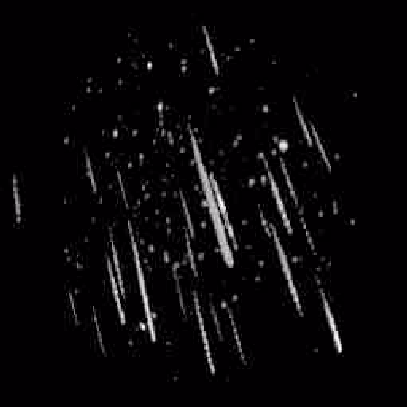
 They're fast, they're bright and they'll put on a free show in the nighttime sky in the next couple of days for Nevadans willing to give up an hour or two of sleep.
"This year is going to be good because there's a new moon, so on Thursday, there will be just a thin crescent moon, and it will set shortly after sunset," Berendsen said. "That means all night, we will have dark skies, and the weather is supposed to be clear, which should make it real nice for viewing."
Meteors are pieces of comets, which are dirty snowballs in space made up of frozen ice and rock-like particles, Berendsen said. The particles that become the meteors in the Perseid showers come from the Swift/Tuttle comet discovered in the 1860s.
"Most of the meteors are about the size of a grain of sand or a thumb, but they are traveling 20,000 mph and there is enough atmosphere up there that they run into atoms and molecules," he said. "So, even if they're just the size of a grain of sand, they give off a fair amount of light when they vaporize."
Researchers have discovered the fossilised remains of an ancient whale with huge, fearsome teeth.
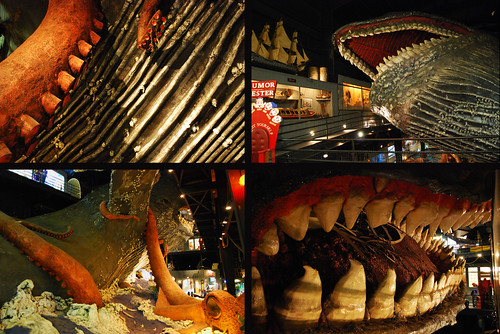 A Peruvian desert has turned out to be the final resting place of an ancient sperm whale with teeth much bigger than those of the largest of today's sperm whales. The fossil, dated at 12–13 million years old, belongs to a new, but extinct, genus and species described in Nature today1. Named Leviathan melvillei, it probably hunted baleen whales. A team of researchers recovered 75% of the animal's skull, complete with large fragments of both jaws and several teeth. On the basis of its skull length of 3 metres, they estimate that Leviathan was probably 13.5–17.5 metres long, within the range of extant adult male sperm whales (Physeter macrocephalus). Its largest teeth, however, are more than 36 centimetres long — nearly 10
  centimetres longer than the largest recorded Physeter tooth.
 penned Moby-Dick — "one of my favourite sea books", says lead author Olivier Lambert of the National Museum of Natural History in Paris.
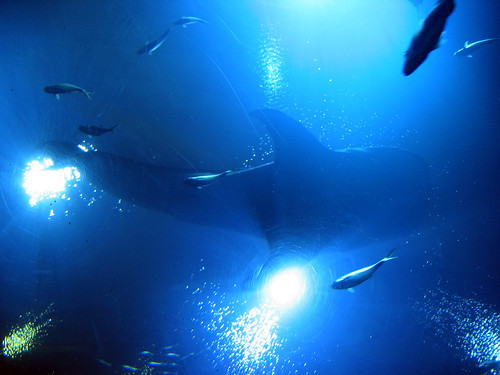 All sperm whales have characteristically large foreheads to hold their 'spermaceti organ', a series of oil and wax reservoirs buttressed with massive partitions of connective tissue. Scientists have long thought that this organ helps sperm whales to dive deeply to feed. The curved 'basin' atop Leviathan 's snout suggests that it also had a large spermaceti organ, even though it probably did not dive to feed. The authors speculate that, if Leviathan hunted baleen whales near the surface, the large spermaceti organ existed long before modern sperm whales became specialized for foraging squid at depth.
 Researchers at the space agency believe they have discovered vital clues that appeared to indicate that primitive aliens could be living on the planet. Data from Nasa's Cassini probe has analysed the complex chemistry on the surface of Titan, which experts say is the only moon around the planet to have a dense atmosphere.
 the moon is generally too cold to support even liquid water on its surface. The research has been detailed in two separate studies. The first paper, in the journal Icarus, shows that hydrogen gas flowing throughout the planet’s atmosphere disappeared at the surface. This suggested that alien forms could in fact breathe. The second paper, in the Journal of Geophysical Research, concluded that there was lack of the chemical on the surface. Scientists were then led to believe it had been possibly consumed by life. Researchers had expected sunlight interacting with chemicals in the atmosphere to produce acetylene gas. But the Cassini probe did not detect any such gas. Chris McKay, an astrobiologist at Nasa Ames Research Centre, at Moffett Field,
  California who led the research, said: “We suggested hydrogen consumption because it's the obvious gas for life to consume on Titan, similar to the way we consume oxygen on Earth. "If these signs do turn out to be a sign of life, it would be doubly exciting because it would represent a second form of life independent from water-based life on Earth.” Professor John Zarnecki, of the Open University, added: “We believe the chemistry is there for life to form. It just needs heat and warmth to kick-start the process. “In four billion years’ time, when the Sun swells into a red giant, it could be paradise on Titan.” They warned, however, that there could be other explanations for the findings. But taken together, they two indicate two important conditions necessary for methane-based life to exist.
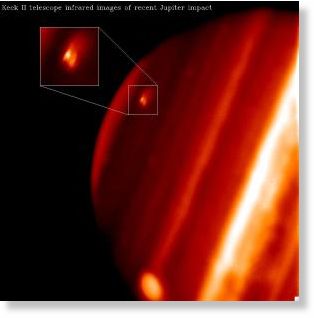 the mystery behind a strange “bruise” on Jupiter. Using an infrared telescope on Hawaii, Nasa scientists found evidence that Jupiter was apparently struck near its south pole, and credited Wesley. Mr Wesley, from Broken Hill, in central Australia, first spotted the scar the size of the Pacific Ocean that was left near Jupiter's south pole last year. Using an infrared telescope on Hawaii, NASA scientists found evidence that Jupiter was struck, crediting Mr Wesley. Follow-up observations made with the Hubble space telescope suggested it was made by an asteroid with a force equivalent to a few thousand nuclear bombs. Hubble is certain to be switched from other duties again to photograph Jupiter and give professional astronomers as much information as possible about the new collision. The latest hit near the equator has not left any visible mark so far, but astronomers are on the lookout. The absence of a detectable “gash”, and the short impact time, has led scientists to believe Jupiter was likely struck by a meteor. "We've never seen a meteor slam into Jupiter," said Glenn Orton of Nasa's Jet Propulsion Laboratory. With these impacts now apparently less rare than once imagined, astronomers will also be re-examining observations of light and dark spots on Jupiter in historical records. In 1686, Italian astronomer Giovanni Cassini noted a dark spot on Jupiter that was about the same size as the largest bruise seen after Comet Shoemaker-Levy hit the planet in 1994. A British Astronomer Royal, George Airy, saw another dark spot that recorded as being nearly four times bigger than shadows cast by Jupiter's main Galilean moons.


 The site "is exactly where solar should be," says David Myers, head of conservation group Wildlands Conservancy.
 He also said state regulators gave NextEra a 382-day plan to offset any effect on Native American cultural resources on the site, when the company didn't have 382 days before it had to break ground to get stimulus funding.


